Source Deep Drawing Aluminum Circle for Kitchen, Industry, Decorations
Find and compare 30 listings for deep drawing aluminum circle across 1000, 3000, and 6000 series grades. Evaluate options from Henan and Shandong suppliers featuring mill finish, cold drawn techniques, and customized thicknesses for various manufacturing needs.
Key considerations
Products List





Comprehensive Sourcing Guide
Deep Drawing Aluminum Circle Sourcing Guide
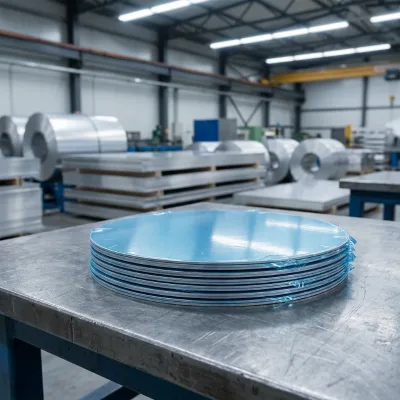
Deep drawing aluminum circles are specialized semi-finished products designed for high-forming operations where material must flow uniformly without tearing or thinning excessively. These components serve as the foundational blanks for manufacturing cookware, automotive parts, and decorative items, requiring precise control over grain structure and temper to ensure consistent performance during the drawing process. Buyers must recognize that the success of deep drawing relies heavily on the initial material properties, specifically the alloy grade and temper condition, which dictate the metal's ductility and yield strength.
When sourcing these circles, procurement teams should focus on suppliers who demonstrate a clear understanding of the relationship between the aluminum grade and the intended application. The observed market data indicates a diverse range of offerings, from 1000 Series pure aluminum to 3000 and 6000 Series alloys, each suited for different mechanical demands. A buyer must align the specific alloy selection with the final product requirements, ensuring that the chosen material can withstand the severe deformation inherent in deep drawing without compromising the structural integrity of the finished good.
Product Scope and Observed Listing Signals
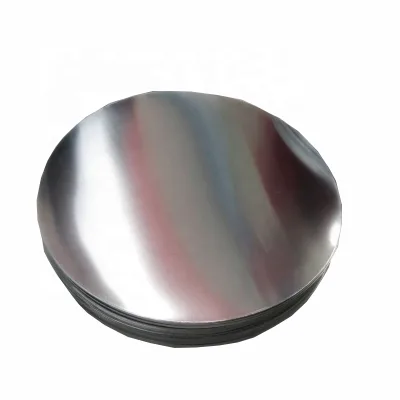
The current market landscape for deep drawing aluminum circles reveals a wide spectrum of product variations, characterized by distinct shapes, surface treatments, and customization options. Listings frequently highlight round shapes with diameters ranging from 200mm to 1200mm, while thicknesses are often customizable to meet specific project needs, spanning from 0.2mm to 200mm. The surface finish is predominantly observed as mill finish, which is typical for raw material intended for further processing, though some suppliers offer specific treatments to enhance formability or aesthetic appeal for decorative applications.
Buyers should carefully evaluate the observed listing signals regarding packaging and origin to ensure logistical compatibility and supply chain reliability. Products are commonly shipped on pallets or in wood fumigation packages to prevent damage during transit, with origins primarily traced to major manufacturing hubs in China, including Henan and Shandong provinces. The presence of customization availability suggests that many suppliers can adapt dimensions and specifications, but procurement teams must verify that these customizations do not inadvertently compromise the material's deep drawing capabilities or lead to extended lead times.
Technical Specifications to Verify
Verifying the technical specifications of deep drawing aluminum circles requires a rigorous assessment of the alloy composition, temper condition, and dimensional tolerances. The observed data points to a variety of alloy series, including 1000, 3000, and 6000 Series, alongside non-alloy options, each offering different balances of strength and formability. It is critical to confirm that the selected temper, whether in the O (annealed) range or the T3-T8 range, aligns with the specific drawing depth and complexity of the intended application, as the wrong temper can lead to cracking or uneven wall thickness in the final product.
Dimensional accuracy and surface quality are equally vital parameters that must be validated before placing an order. Specifications often include customized thicknesses and diameters, with some listings noting a tolerance of ±1%, which is essential for maintaining consistency in automated manufacturing lines. Buyers should also inspect the surface treatment details, ensuring that mill finishes are free from defects that could act as stress concentrators during the drawing process. Additionally, the product model numbers, such as A3003, A3004, and A6061, serve as identifiers for specific alloy compositions that must be cross-referenced with engineering requirements.
Compliance and Safety Documentation
Ensuring compliance with international standards and safety regulations is a non-negotiable aspect of sourcing deep drawing aluminum circles, particularly for applications in food contact or transportation. The market data indicates that suppliers often provide certifications such as ASTM, GB, ISO, and RoHS, which are essential for verifying that the material meets specific chemical and mechanical performance criteria. Buyers must request and review these certification documents to confirm that the aluminum grade, whether it is a 1000 Series or a specialized alloy, adheres to the necessary purity and safety standards for the intended end-use.
Beyond material certifications, procurement teams should verify that the supplier's quality management systems align with industry expectations for traceability and consistency. The presence of standards like ASTMB and ISOGrade:1000 Series suggests a commitment to standardized testing, but buyers should not assume that every listed product automatically satisfies all regulatory requirements without explicit documentation. It is prudent to ask for test reports that validate the chemical composition and mechanical properties, ensuring that the material is safe for use in sensitive applications such as kitchenware or transportation components where failure could pose significant risks.
Cost Drivers and Commercial Terms
The cost of deep drawing aluminum circles is influenced by several key drivers, including the alloy grade, thickness, diameter, and the level of customization required. While observed price ranges in the market can vary significantly from $2 to $4199, these figures often reflect differences in material quality, order volume, and specific processing requirements rather than a uniform market rate. Buyers should understand that higher-grade alloys or specialized tempers may command a premium, and the decision to customize dimensions or surface finishes will directly impact the final unit cost.
Commercial terms and payment structures play a crucial role in the overall procurement strategy, with many suppliers requiring a 30% T/T advance and a 70% balance payment. Minimum Order Quantities (MOQs) can range widely, from as low as 1 unit to 25,000 units, with some specific listings indicating an MOQ of 5 tons, which is typical for bulk industrial transactions. Lead times are generally observed to be between 8 and 14 days, but this can fluctuate based on the complexity of the order and the supplier's current production capacity, making it essential to negotiate clear delivery schedules and penalty clauses for delays.
Supplier Qualification and Quality Control
Selecting a qualified supplier for deep drawing aluminum circles involves a thorough evaluation of their manufacturing capabilities, quality control processes, and track record. The observed data highlights suppliers located in Henan and Shandong provinces, regions known for their aluminum processing infrastructure, but buyers must look beyond geography to assess the supplier's technical expertise in cold drawing and surface treatment processes. A reliable supplier should demonstrate the ability to maintain consistent quality across large batches, ensuring that the temper and alloy composition remain stable throughout the production run.
Quality control measures should be a central part of the supplier evaluation, with a focus on their ability to provide samples and conduct pre-shipment inspections. Many suppliers offer free samples, which allows buyers to physically test the material's formability and surface quality before committing to a large order. It is advisable to establish a clear protocol for quality verification, including random sampling and testing against agreed-upon standards, to ensure that the delivered circles meet the precise specifications required for deep drawing operations.
Long-Term Procurement Checks
Establishing a long-term procurement relationship for deep drawing aluminum circles requires ongoing monitoring of supplier performance and material consistency. Buyers should implement a system for regular audits and performance reviews to ensure that the supplier continues to meet quality standards and delivery timelines over time. This proactive approach helps mitigate the risk of supply chain disruptions and ensures that the material properties remain consistent, which is critical for maintaining the quality of the final deep-drawn products.
Continuous improvement and adaptation to market changes are also essential for long-term success in this sector. As technology evolves and new alloy formulations become available, buyers should stay informed about advancements that could offer better performance or cost efficiency. Maintaining open communication with suppliers and fostering a collaborative relationship can lead to better problem-solving and innovation, ensuring that the procurement strategy remains robust and responsive to the dynamic needs of the manufacturing industry.
FAQs
What alloys are used for deep drawing aluminum circles?
Deep drawing aluminum circles are typically made from 1000, 3000, and 6000 series alloys. Common grades include A1050, A3003, A3004, A3104, and A6061. These alloys offer varying levels of formability and strength, allowing selection based on specific drawing requirements and final application needs.
What is the standard thickness range for these circles?
Thickness is customized to meet specific drawing needs, typically ranging from 0.2mm to 200mm. The standard product specifications often cite a range of 1.0mm to 3.5mm for general industrial use. Customized thickness ensures optimal material flow during the deep drawing process without tearing or thinning excessively.
Can deep drawing aluminum circles be customized in size?
Yes, customization is available for diameter and thickness. Standard diameters range from 200mm to 1200mm, but specific dimensions can be tailored. The surface treatment is usually mill finish, and the shape is round. Customization allows for precise fitting into various kitchen or industrial deep drawing applications.
What certifications are provided for aluminum circles?
Products typically come with certifications such as ASTM, GB, ISO, and RoHS. Specific standards like ASTMB and ISO Grade 1000 Series are common. These certifications ensure the material meets international quality and safety standards, which is crucial for industries requiring verified material properties for deep drawing and subsequent manufacturing processes.
What is the typical lead time for orders?
The delivery time is generally 8 to 14 days after order confirmation. This timeframe applies to standard orders, though larger quantities may vary. Payment terms often require a 30% T/T advance with the 70% balance paid before shipment. Packaging is usually standard seaworthy or palletized for safe transport.
What is the minimum order quantity for these circles?
The minimum order quantity can vary, with some listings indicating a MOQ of 5 tons. Other sources may list MOQs ranging from 1 to 25,000 units depending on the specific alloy and customization. Buyers should confirm the exact MOQ with the supplier based on their required volume and alloy selection.